The Backbone of Business Data
Despite the rise of NoSQL and big data technologies, relational databases remain the absolute backbone of modern business. And when it comes to enterprise relational databases, Microsoft SQL Server is an industry giant.
Whether you are a data analyst, backend developer, or IT administrator, mastering SQL is non-negotiable.
What is SQL Server?
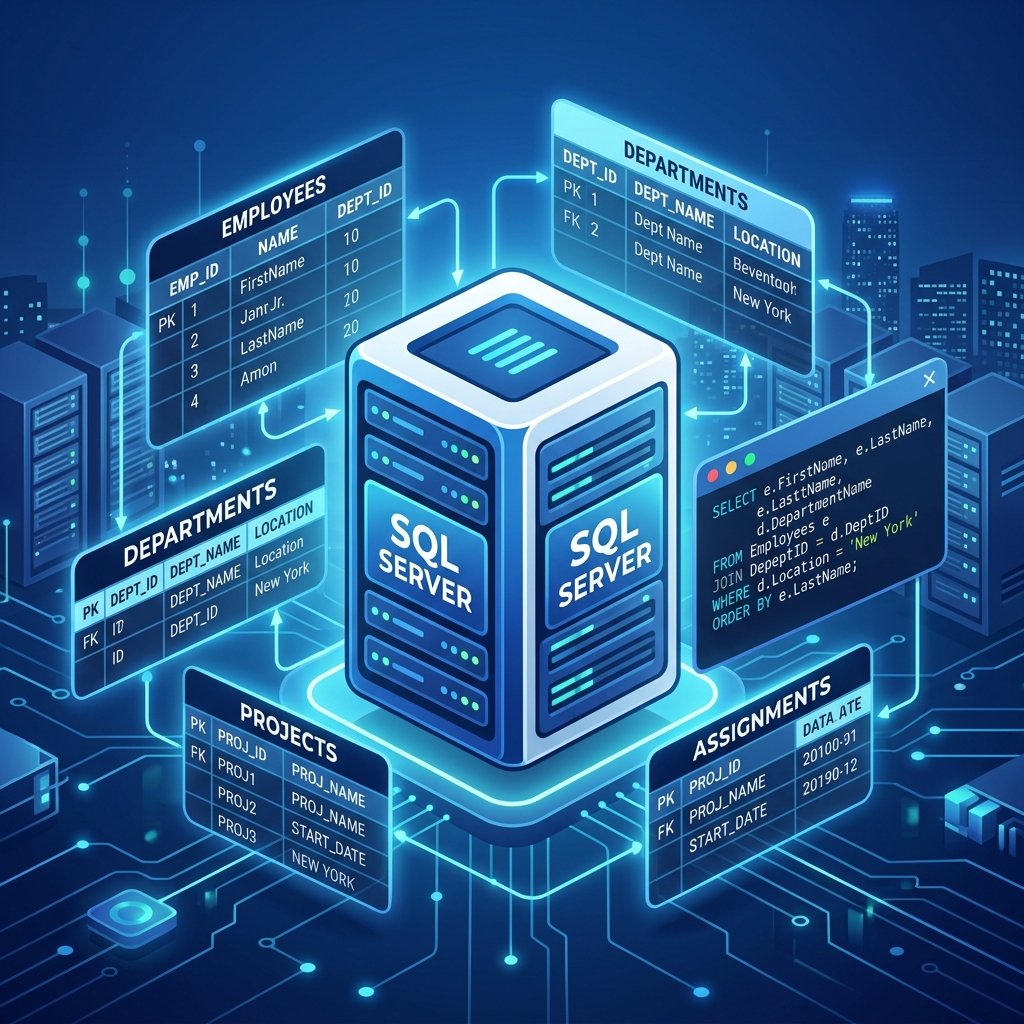
SQL Server is a Relational Database Management System (RDBMS) developed by Microsoft. Its primary function is storing and retrieving data as requested by other software applications.
Essential Tips for Beginners
- Understand the Execution Order: When you write a query (`SELECT * FROM table WHERE...`), SQL doesn't process it top-to-bottom. It processes the `FROM` clause first, then `WHERE`, then `GROUP BY`, `HAVING`, `SELECT`, and finally `ORDER BY`. Understanding this solves 90% of beginner errors.
- Use Aliases (AS): Always use table aliases to make your code readable. E.g., `SELECT c.Name FROM Customers AS c`.
- Beware of SELECT *: Never use `SELECT *` in production code. It retrieves all columns, which wastes memory and network bandwidth. Explicitly name the columns you need.
- Master the JOINs: `INNER JOIN` (returns matches in both tables) and `LEFT JOIN` (returns everything from the first table and matches from the second) will constitute 99% of your data blending work.
- Use Common Table Expressions (CTEs): Instead of writing messy, deeply nested subqueries, use the `WITH` clause to create clean, temporary result sets that make your code infinitely more readable.
Performance Matters
As databases grow to millions of rows, poorly written queries can crash systems. Learn the basics of Indexing. An index in a database is like an index in a book—it allows the SQL engine to find data instantly without scanning every single page (row) of the table.
SQL is a skill that takes a weekend to learn and a lifetime to master. Start querying today!